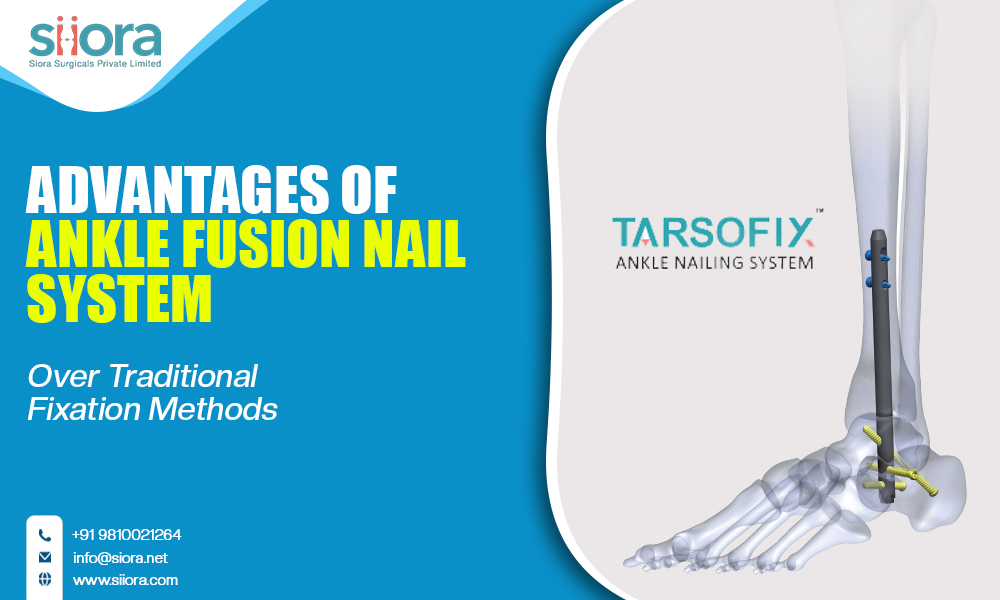
If you’ve ever had chronic ankle pain, you know how much it can turn everyday life into a struggle. For many people living with severe arthritis, deformities, or stubborn fractures, surgery becomes the only way forward. Fusion surgery—where the joint is essentially locked into one strong unit—is often the recommended path. For years, this was done using plates, screws, or in some cases, an external fixator. These methods worked, but they also came with problems. That’s where the ankle fusion nail system has changed the game.
Stability That Makes a Difference
The truth is, ankle fusion lives or dies on stability. Traditional plates sit on the outside of bones, while screws hold everything tight from the surface. The problem? Stress isn’t spread evenly. An intramedullary nail, placed right down the center of the bone canal, acts like an internal support pillar. Each step you take puts less strain on the fusion site, which means better chances that it heals the way it should. For patients, that translates to fewer complications and a stronger ankle long term.
Smaller Surgery, Quicker Recovery
Nobody wants a massive surgical cut if it’s avoidable. Conventional plating often requires opening up more tissue, which increases the risk of infection and wound trouble. The nail system, on the other hand, usually slides in through much smaller incisions. Less invasion means less bleeding, less tissue damage, and—most importantly—a smoother recovery. If you’re someone managing diabetes or blood flow issues, that reduction in risk matters even more.
Getting Back on Your Feet Sooner
Here’s something patients love hearing: “You can walk sooner.” With screws and plates, many people face weeks or months on crutches. That downtime not only drains energy but also weakens muscles. Intramedullary nails are solid enough to let patients put weight on the leg much earlier. Walking sooner keeps muscle tone strong, improves circulation, and, honestly, helps morale too. Because let’s be real—staying off your feet for months isn’t easy for anyone.
Hardware That Doesn’t Annoy You Later
Ever heard patients complain that “the screws hurt” or “the plate digs in”? It’s pretty common. Screw breakage or irritation under the skin often means another surgery just to remove hardware. Ankle nails are different. Buried deep inside the bone, they usually stay out of the way. No sharp ends poking at tendons, no edges rubbing against the skin. For most, it simply feels more natural.
A Lifesaver in Complex Cases
Not all ankles are straightforward. Some patients come after failed surgeries, serious trauma, or years of deformity. In these messy cases, plates don’t always achieve the best alignment. Nails are incredibly useful here because they give the surgeon more control over correcting bone position. Even in revision surgeries where bone quality is poor, nails have shown better reliability compared to surface fixation.
Built to Last
Think about how much work your ankle does in a single day—thousands of steps, each one pounding the joint. Plates and screws can fatigue under that constant pressure. Nails, being central and aligned with the body’s own weight axis, are simply better at distributing stress. That’s why they usually last longer, giving patients confidence that their surgery will stand the test of time.
The Big Picture for Patients
At the end of the journey, fusion is about one thing: giving back stability and reducing pain. What makes the nail system special is how it improves the entire experience—shorter surgery, quicker rehab, fewer hardware issues, and durability that lasts. Patients often describe the outcome in simple terms: “I can walk again without worrying.” And that’s what really matters.
Final Word
Traditional hardware still has its uses, but the world of orthopedics has evolved. The ankle fusion nail system is more than just a new tool—it’s become the smarter option in most cases. For surgeons, it offers versatility. For patients, it promises comfort, stability, and a faster return to normal life.
Siora Surgicals Pvt. Ltd. is a leading manufacturer and supplier of a CE-certified range of trauma implants and instruments. Operating for over 3 decades, the company has established a huge global presence spanning 50+ countries. Siora is also looking for a reliable orthopedic distributor in Ukraine to expand its international market presence.
 Siora Surgicals