Injuries to the hand are incredibly common, whether from sports, accidents, or even everyday mishaps. Among these, fractures—or broken bones—can be particularly tricky because of the hand’s intricate structure. When a simple cast or splint isn’t enough, surgeons may turn to a specialized tool called a hand plate to help the healing process. But what exactly is a hand plate, and when is it necessary?
Let’s break it down in simple terms.
Understanding the Hand Plate
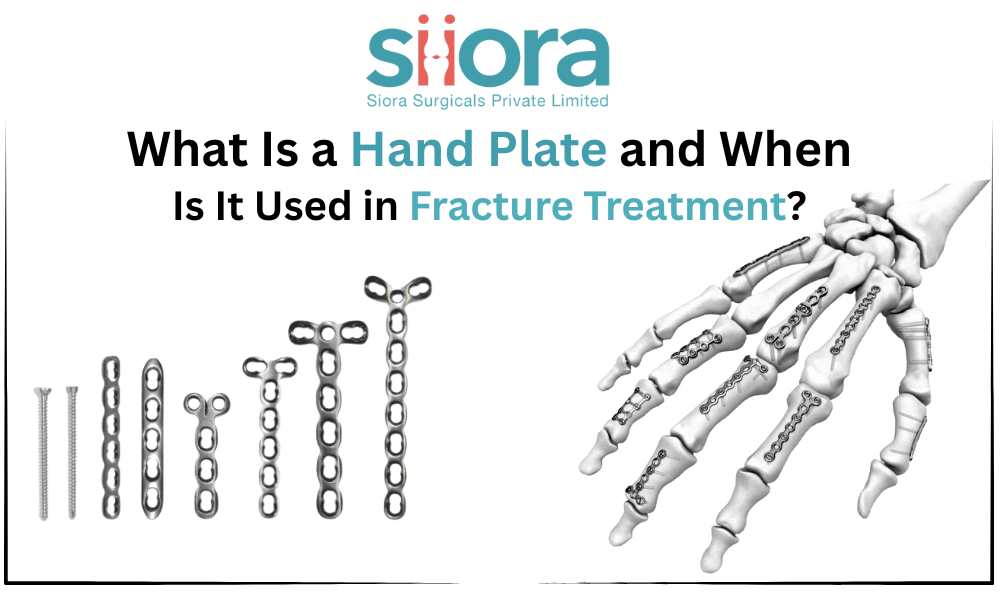
A hand plate is a small, specially designed piece of metal—usually titanium or stainless steel—that acts as an internal splint. It’s shaped and engineered to fit the contours of the bones in your hand. These plates come in various sizes and shapes to match different bones, whether it’s a metacarpal (the long bones in your palm) or a phalanx (the bones in your fingers).
The primary role of a hand plate is to stabilize broken bones. By securing the fractured pieces together, the plate allows the bone to heal in the correct alignment. The plate is attached to the bone using tiny screws, creating a sturdy, internal support system. Think of it as scaffolding that holds a structure in place until it’s strong enough to stand on its own.
When Is a Hand Plate Used?
Not every fracture requires a hand plate. In fact, many hand fractures can be treated successfully with simple immobilization, like a cast or splint. However, certain situations make the use of a hand plate more suitable—or even necessary.
- Complex or Unstable Fractures: If the bone is shattered into multiple pieces (a comminuted fracture) or if the break is particularly unstable, a hand plate helps bring everything back together with precision.
- Displaced Fractures: When the broken parts of the bone have moved out of place, and manual realignment (called a closed reduction) isn’t enough, a surgeon may opt to use a hand plate to maintain the proper position during healing.
- Fractures Involving Joints: Breaks that extend into a joint can lead to long-term stiffness or arthritis if not aligned perfectly. A hand plate provides the accuracy and stability needed for such delicate repairs.
- Failure of Conservative Treatment: Sometimes, even after immobilization, a fracture doesn’t heal properly (non-union) or heals in a poor position (malunion). In these cases, a hand plate might be used during a corrective surgery.
- High-Demand Patients: For athletes, manual workers, or anyone needing to regain full hand function quickly and reliably, a hand plate might offer a faster route back to normal life.
The Procedure and Recovery
Implanting a hand plate requires a surgical procedure called open reduction and internal fixation (ORIF). Under anesthesia, the surgeon makes a small incision to expose the broken bone, carefully aligns the pieces, and secures them with the plate and screws.
Recovery times vary but generally involve a period of immobilization followed by physical therapy to regain strength and flexibility. The plate may remain in the hand permanently unless it causes discomfort or other issues down the line.
A Reliable Tool for Healing
In the world of fracture treatment, hand plates are invaluable for their precision and reliability. They offer a tailored solution for complex injuries, helping people recover faster and with fewer complications. Thanks to advancements in medical technology, today’s plates are stronger, smaller, and more comfortable than ever, allowing patients to get back to their daily lives with minimal disruption.
While the idea of having metal in your hand might sound daunting, rest assured that hand plates have a strong track record of success. If you or someone you know faces a hand fracture that requires surgical intervention, understanding the role of a hand plate can help demystify the process and set expectations for a smooth recovery.Explore hand locking plates, spine implants, and other advanced and innovative healthcare products at the FIME Show 2025.
 Siora Surgicals