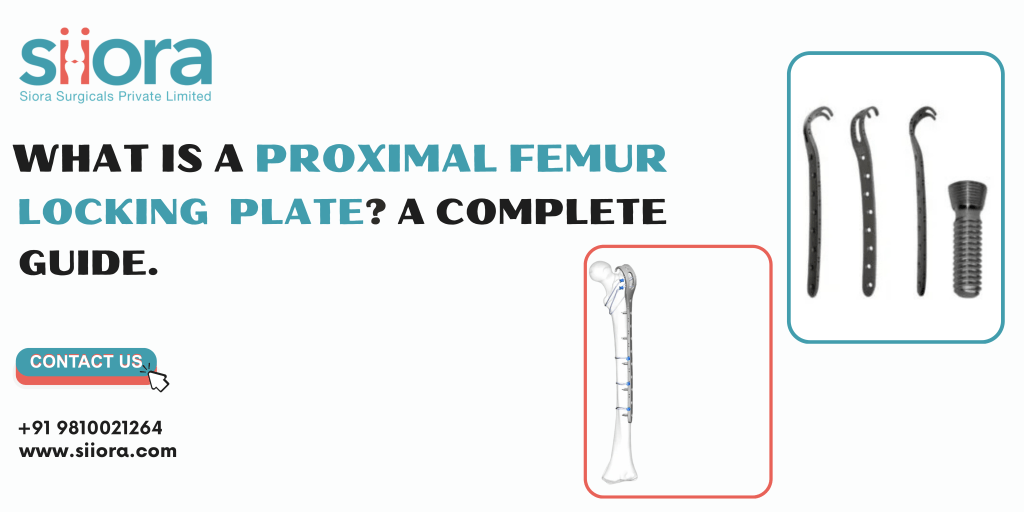
The human femur, or thigh bone, is the strongest and longest bone in the body. It plays a crucial role in mobility and weight-bearing. Unfortunately, due to high-impact injuries such as road accidents, falls, or osteoporosis-related fractures, the proximal femur (the upper part of the femur) can sustain severe damage. To aid in the healing and stabilization of such fractures, orthopedic surgeons use a specialized implant known as a proximal femur locking plate. This article will provide a complete guide to understanding what a proximal femur locking plate is, its design, function, and its significance in orthopedic surgery.
Understanding the Proximal Femur Locking Plate
A proximal femur locking plate is a surgical implant designed to stabilize fractures in the upper portion of the femur. Unlike conventional plates, which rely solely on friction between the bone and screws, locking plates have threaded screw holes that allow screws to lock into the plate, providing superior stability. This innovative design reduces the risk of screw loosening and improves fracture healing, particularly in osteoporotic or fragile bones.
Key Features of a Proximal Femur Locking Plate
The proximal femur locking plate is crafted with several key features to optimize surgical outcomes:
Anatomical Design
These plates are pre-contoured to match the natural shape of the proximal femur, reducing the need for intraoperative bending and ensuring better alignment.
Locking Screw Technology
The locking mechanism between the screws and the plate prevents micromotion, leading to enhanced stability.
Multiple Screw Options
The plate accommodates different types of screws (locking and non-locking), providing surgeons with versatile fixation choices.
Minimally Invasive Approach
Some designs support percutaneous or minimally invasive surgical techniques, which reduce soft tissue damage and promote quicker recovery.
Biocompatible Material
Typically made from stainless steel or titanium, these plates offer strength, durability, and resistance to corrosion.
Indications for Use of Proximal Femur Plate
A proximal femur locking plate is commonly used in the following conditions:
Intertrochanteric Fractures
Breaks occur between the greater and lesser trochanter, usually due to high-impact trauma or osteoporosis.
Subtrochanteric Fractures
Fractures that occur just below the lesser trochanter are often challenging to treat due to biomechanical stress in the region.
Periprosthetic Fractures
These fractures occur around a pre-existing hip implant, requiring stable fixation.
Nonunion and Malunion Cases
When a previous fracture has failed to heal properly, a locking plate may be used to aid in realignment and stabilization.
What Are the Advantages of Using a Proximal Femur Locking Plate?
The use of a proximal femur locking plate offers several advantages over traditional fixation methods:
Enhanced Stability
The locking mechanism ensures a fixed-angle construct, reducing the risk of hardware failure.
Better Healing in Osteoporotic Bones
Because of the locked screws, even weak or brittle bones receive reliable support.
Lower Risk of Implant Failure
The secure screw-plate interface prevents loosening and mechanical failure.
Minimized Soft Tissue Damage
Some plates allow for minimally invasive techniques, preserving blood supply and reducing post-operative complications.
Versatility
These plates are suitable for a variety of complex fractures, making them a preferred choice for orthopedic surgeons.
Surgical Procedure and Recovery
The procedure for inserting a proximal femur locking plate involves the following steps:
Preoperative Planning
X-rays or CT scans are taken to assess the fracture pattern and select the appropriate implant size.
Patient Positioning
The patient is positioned on an orthopedic table to provide optimal surgical access.
Incision and Fracture Reduction
A controlled incision is made, and the fractured bone segments are aligned correctly.
Plate Fixation
The locking plate is placed along the lateral side of the femur, and screws are inserted in a planned sequence to achieve optimal stability.
Closure and Postoperative Care
The wound is sutured, and the patient is monitored for recovery.
Recovery time varies depending on the patient’s age, overall health, and the severity of the fracture. Physical therapy plays a critical role in regaining mobility and strengthening the muscles around the hip and thigh.
Conclusion
A proximal femur locking plate is a highly effective orthopedic implant used to treat complex fractures in the upper femur. With its anatomical design, locking screw technology, and ability to provide stable fixation, it has become a game-changer in fracture management. Whether treating intertrochanteric fractures or periprosthetic complications, this implant ensures better healing outcomes and improved patient mobility. If you or a loved one is facing a proximal femur fracture, consult an orthopedic specialist to explore the best treatment options available.If you are looking to explore a huge range of cutting-edge healthcare products, including orthopedic implants, register for the FIME Exhibition 2025.
 Siora Surgicals